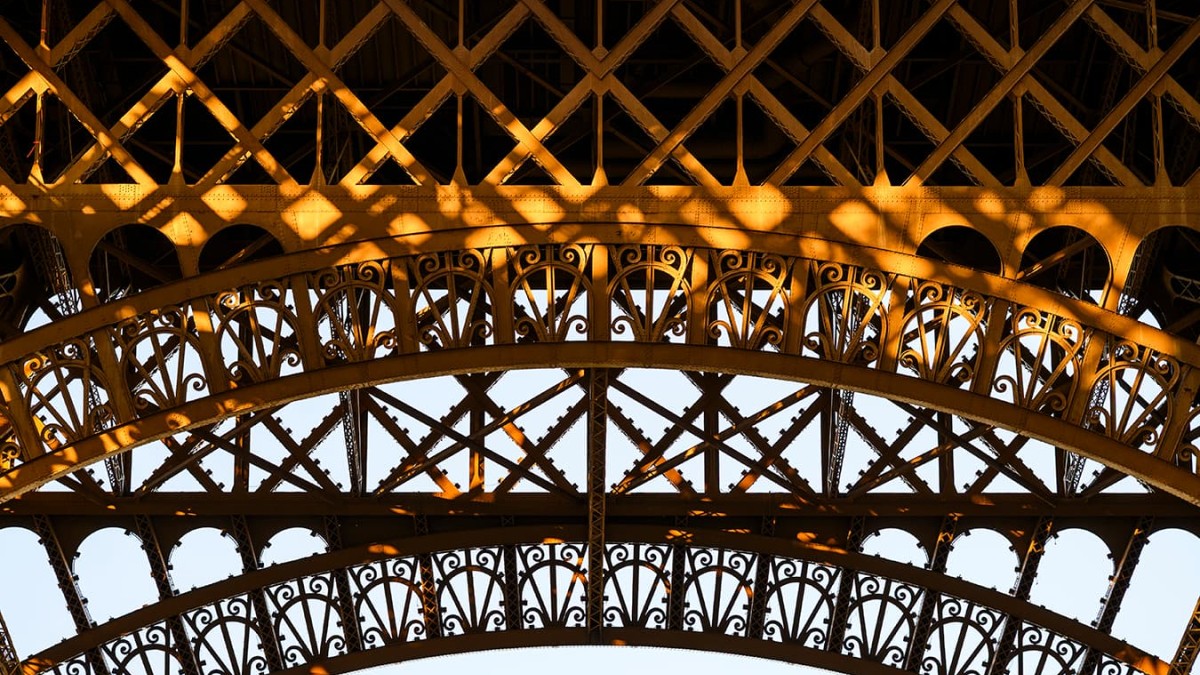
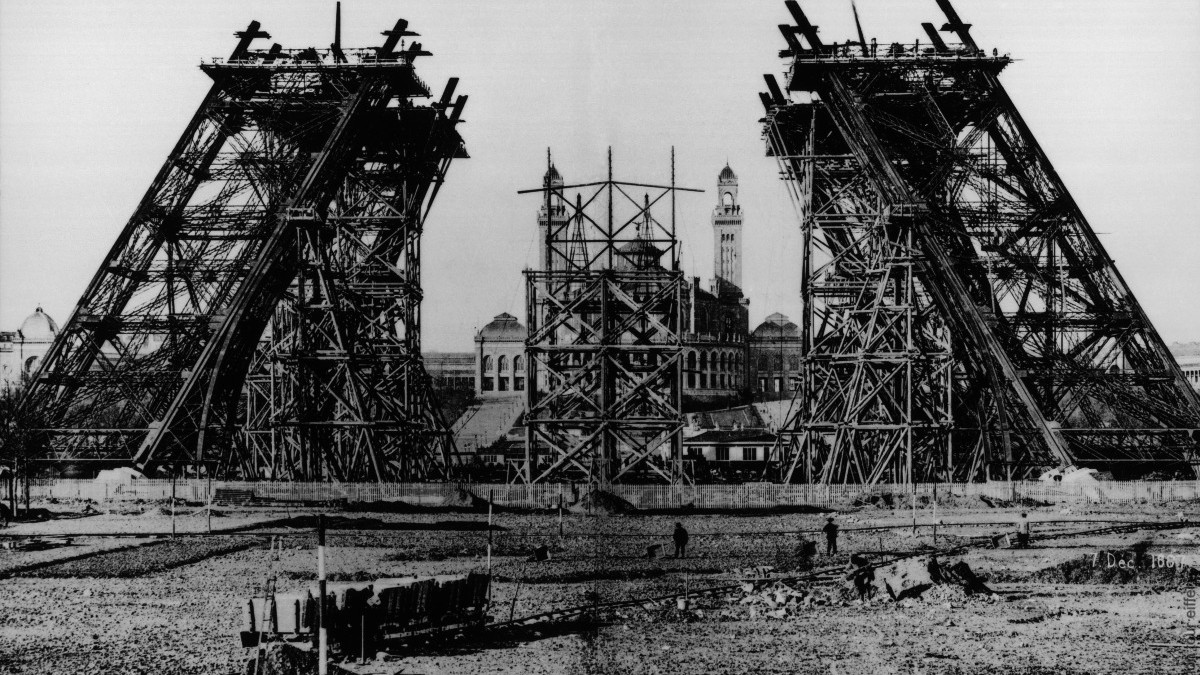
Gustave Eiffel

The Tower is not Gustave Eiffel’s only creation. This enthusiast and true genius was able to go beyond his own limits to bequeath to us monuments such as the dome on the Nice Observatory, the metallic structure of the Statue of Liberty, not to mention the Bordeaux railway bridge.
Gustave Eiffel : a passionate engineer
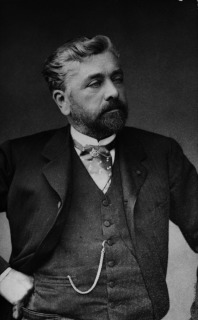
An engineer by training, Eiffel founded and developed a company specializing in metal structural work, whose crowning achievement was the Eiffel Tower. He devoted the last thirty years of his life to his experimental research.
Born in Dijon in 1832, he graduated from the Ecole Centrale des Arts et Manufactures in 1855, the same year that Paris hosted the first World's Fair.
He spent several years in the South West of France, where he supervised work on the great railway bridge in Bordeaux, and afterwards he set up in his own right in 1864 as a "constructor", that is, as a business specializing in metal structural work.
What monuments and buildings were built by Gustave Eiffel?
Gustave Eiffel had a remarkable and prolific career as a builder that profoundly shaped the late 19th century. In addition to the Eiffel Tower, built for the 1889 World’s Fair, Gustave Eiffel is best known for another symbol of steel engineering: the ingenious internal framework of the Statue of Liberty (1884), which allows it to stand upright.
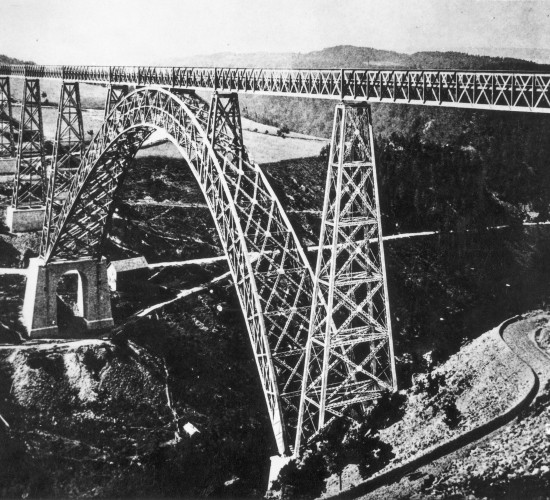
Before these monuments, Eiffel made a name for himself in the construction of bridges and viaducts of remarkable technical audacity. Among the most famous are two nearly identical viaducts: the Maria Pia Bridge in Porto (Portugal), built in 1876, and the Garabit Viaduct, built in France in 1884.
Finally, Gustave Eiffel designed numerous public buildings and engineering structures around the world, the most iconic of which are the Western Railway Station in Budapest (Hungary), completed in 1877, and the dome of the Nice Observatory (France).
An International heritage
Gustave Eiffel left us hundreds of steel structures of all kinds. His work, found in more than forty countries, is a testament to a visionary engineer whose influence extends far beyond France’s borders.
While bridges—and particularly railroad bridges—were his specialty, he also distinguished himself in the fields of structural steelwork and industrial facilities. His career was marked by a remarkable series of achievements. He was also known for his inventiveness, leading his company to innovate with portable bridges—sold as “kits” worldwide—as well as covered markets in North Africa and Asia, and lighthouses.
How did Gustave Eiffel end his career as an entrepreneur?
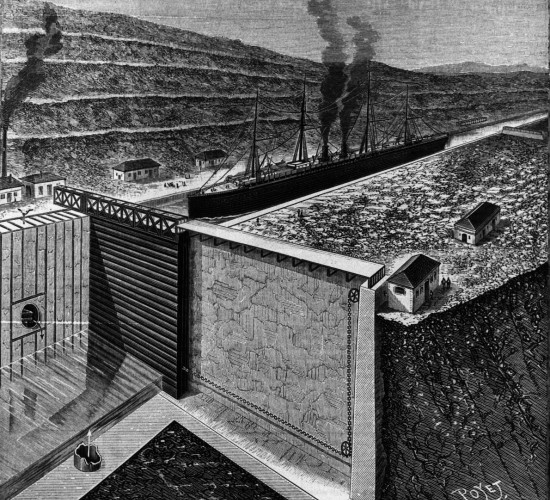
In 1887, Gustave Eiffel agreed to build the locks of the Panama canal, an immense undertaking badly managed by Ferdinand De Lesseps, which ended in the biggest financial scandal of the century.
This was the biggest contract in his entire career in business, and also the one with the greatest risk. Given the risk he faced, he was granted major financial advantages and solid guarantees, which allowed him to collect his profit as soon as the work was begun.
Despite the care which Eiffel took in the project, the liquidation of the canal construction company, Compagnie du Canal, on February 4 1889, led to his own indictment for fraud alongside De Lesseps and his son, and to a sentence of two years in prison and a fine of 2000 francs, even though nothing could really be blamed on him personally.
With his honour and dignity severely compromised, he withdrew from business. The ruling was later to be annulled by the highest appeal court, the Cour de Cassation, liberating him of all obligations concerning the accusations, which put an end to any further court action against him.
Gustave Eiffel’s second career: scientific research
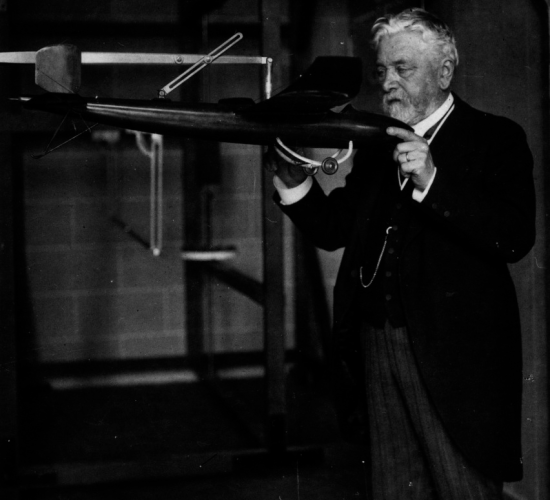
In retirement following the Panama scandal, Eiffel devoted the final thirty years of his life to a fruitful career as a scientist.
First of all he set himself to finding scientific uses for the Tower, which had only been built to stand for twenty years. He employed it in wind resistance experiments, as a meteorological observation post, and above all as a giant aerial mast for the new science of radio broadcasting.
He collected meteorological data at posts installed in his various properties, and at the same time pursued his research into aerodynamics, building a wind tunnel right at the foot of the Tower, and then a second and much larger one on Rue Boileau in Paris, in 1909. This latter wind tunnel is still in service. He died on December 27, 1923 at the age of 91.
The Private Life of Gustave Eiffel
Why Did Gustave Eiffel Change His Name?
Gustave Eiffel was not born with the name “Eiffel.” His birth name was Alexandre Gustave Bonickhausen, known as Eiffel. The name change was due to a combination of administrative, practical, and identity-related reasons tied to his family history.
His paternal family, of German origin, bore the name Bönickhausen, which was Frenchified to Bonickhausen in the 18th century. By the early 19th century, several family members had begun using the nickname “Eiffel,” in reference to the Eifel region of Germany from which they originated. This nickname, which was easier to pronounce and spell, eventually became common practice within the family, particularly as a way to distinguish themselves in a context where German-sounding names were sometimes viewed negatively.
In 1880, Gustave Eiffel formalized this name by having it recognized by the French government. This decision reflected both a desire to clarify his identity and simplify his name for his public career, as well as a wish to follow a well-established family tradition.
What is Gustave Eiffel’s family history?
Gustave Eiffel married Marguerite Gaudelet in 1862, just as he was beginning his career as an engineer. The couple had five children: Claire, Laure, Edouard, Valentine, and Albert. Their marriage was relatively short-lived, as Marguerite died prematurely in 1877, at only 32 years old, likely from a lung disease. Her death deeply affected Eiffel, who never remarried and subsequently devoted himself entirely to his work and his children. He was particularly close to his eldest daughter, Claire, who played a pivotal role by his side.

Who are Gustave Eiffel’s descendants?
With five children born between 1863 and 1873, Gustave Eiffel had 12 grandchildren during his lifetime. Twelve great-grandchildren were born afterward. Today, there are approximately 70 living descendants of Gustave Eiffel, representing the fifth or even sixth generation since their illustrious ancestor. A large number of these descendants are members of the Association of Descendants of Gustave Eiffel, which aims to promote and preserve his legacy.
How did Gustave Eiffel spend his final days?
Gustave Eiffel spent his final days peacefully, surrounded by his family. He remained intellectually active well into old age, publishing scientific works and closely following developments regarding the Eiffel Tower, whose scientific value and utility he championed in order to preserve it.
In the final years of his life, Mr. Eiffel divided his time between his Parisian laboratory, his home on Rue Rabelais in Paris, and his country home in Beaujon.
He died on December 27, 1923, at the age of 91, in his Parisian mansion. He is buried in the Levallois-Perret Cemetery near Paris, alongside his wife Marguerite.